
With a new industrial heat pump that reuses surplus heat from production, a major Danish food producer has cut its natural gas consumption significantly – and taken a concrete step toward its 2030 targets.
This case concerns one of Denmark's larger food companies, with production across several factories. Over a number of years, we have worked systematically with energy efficiency and electrification to help deliver on their 2030 targets for CO₂ reduction.
When you've set ambitious 2030 targets for CO₂ reduction, the small adjustments aren't enough. You have to find the heavy levers – the ones that really move the needle.
For this food producer, that meant one place in particular: the steam boilers.
Large volumes of natural gas were going into steam and hot water for heating, cleaning and heat treatment.
At the same time, the factory's evaporators were dumping surplus heat into cooling towers – heat that could in principle be reused, but which instead cost both water and electricity to get rid of.
The question was:
Could you connect the two ends and electrify the heat supply in one move?
Together with us at Viegand Maagøe, the food producer took a methodical approach. In 2022, we carried out an energy survey and a walkthrough of the factory, and held the heat demand in the processes up against the available sources of surplus heat.
That gave us a list of project proposals with energy and CO₂ savings, economics and a timeline. We also mapped the potential showstoppers – so the factory knew from the outset what was actually feasible.
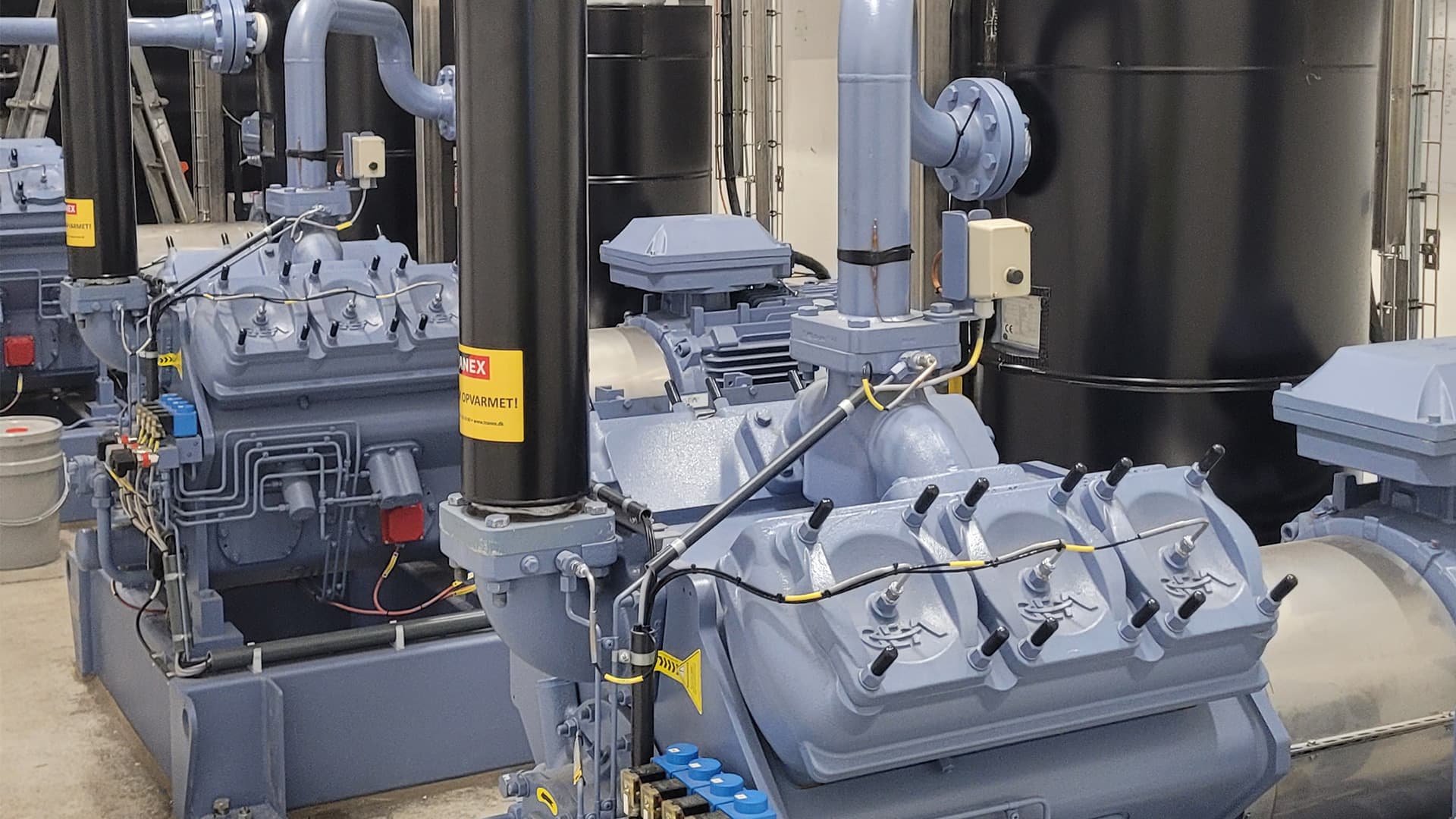
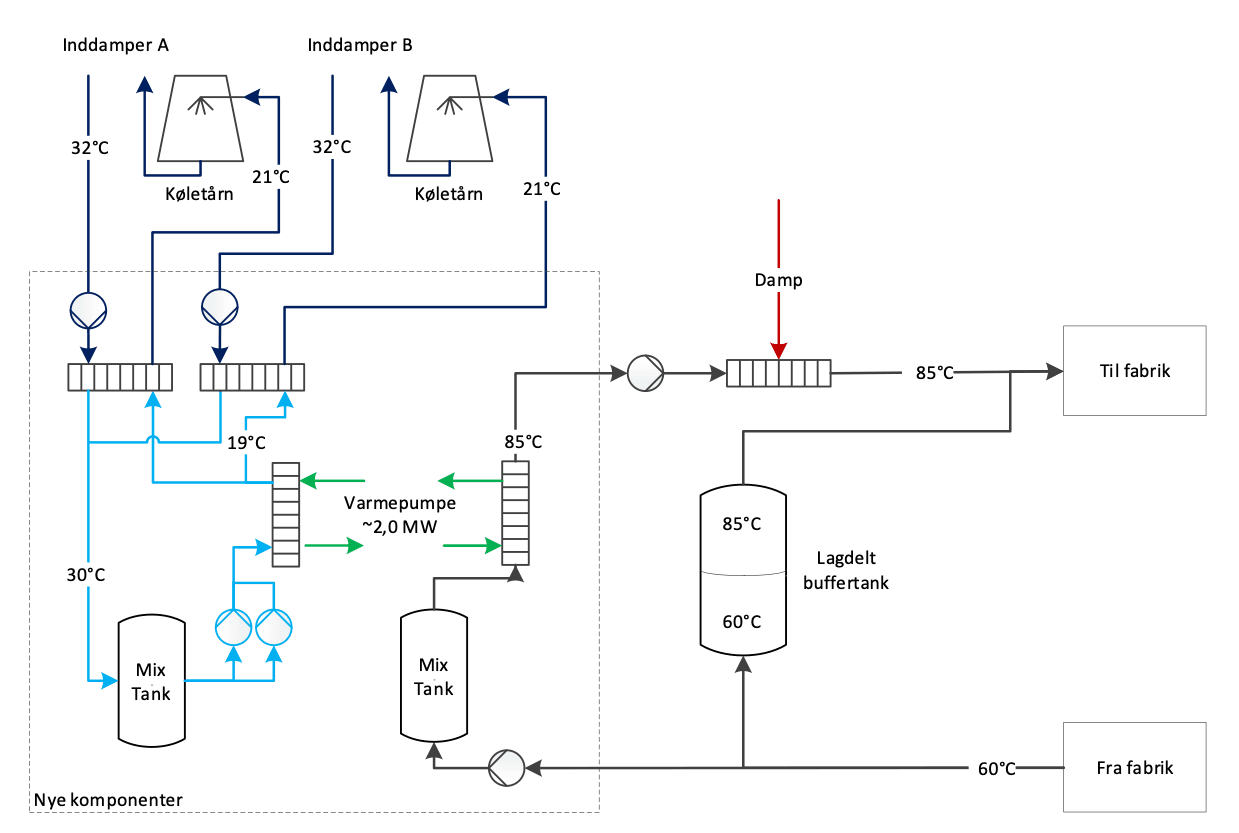
The biggest project was an industrial heat pump that produces 85 °C hot water by harnessing the surplus heat from the evaporators. That water replaces large parts of the steam the boilers would otherwise have to produce on natural gas – and at the same time removes the need for the evaporators' cooling towers. That saves both water and electricity on top of the gas savings.
Once the project was mature, we handled:
A project of this size also needs to be financed before it can be realised.
So we matured the business case so it could stand up to both the internal investment process and the requirements of the Danish Energy Agency's Business Pool – and we secured DKK 5.6 million in funding.
Da projektet var modnet, stod vi for:
Et projekt af den her størrelse skal også finansieres, før det kan realiseres.
Derfor modnede vi forretningscasen, så den kunne stå mål med både den interne investeringsproces og kravene i Energistyrelsens Erhvervspulje – og hjemtog 5,6 mio. kr. i tilskud.
The heat pump is up and running, and the savings are concrete:
Just as importantly: the heat pump has opened the door to the next step. The factory is now continuously working to move more steam-heated consumers over onto the heat pump's hot water.
And the thorough groundwork is paying off:
The detailed energy survey means the company now knows which initiatives to prioritise to best reach its 2030 targets – from both a CO₂-reduction and a financial perspective.
Since 2006, we have helped hundreds of companies, organisations, public authorities and everything in between accelerate the green transition and advance the sustainability agenda. Reach out if you'd like to hear more about how we can help you.
