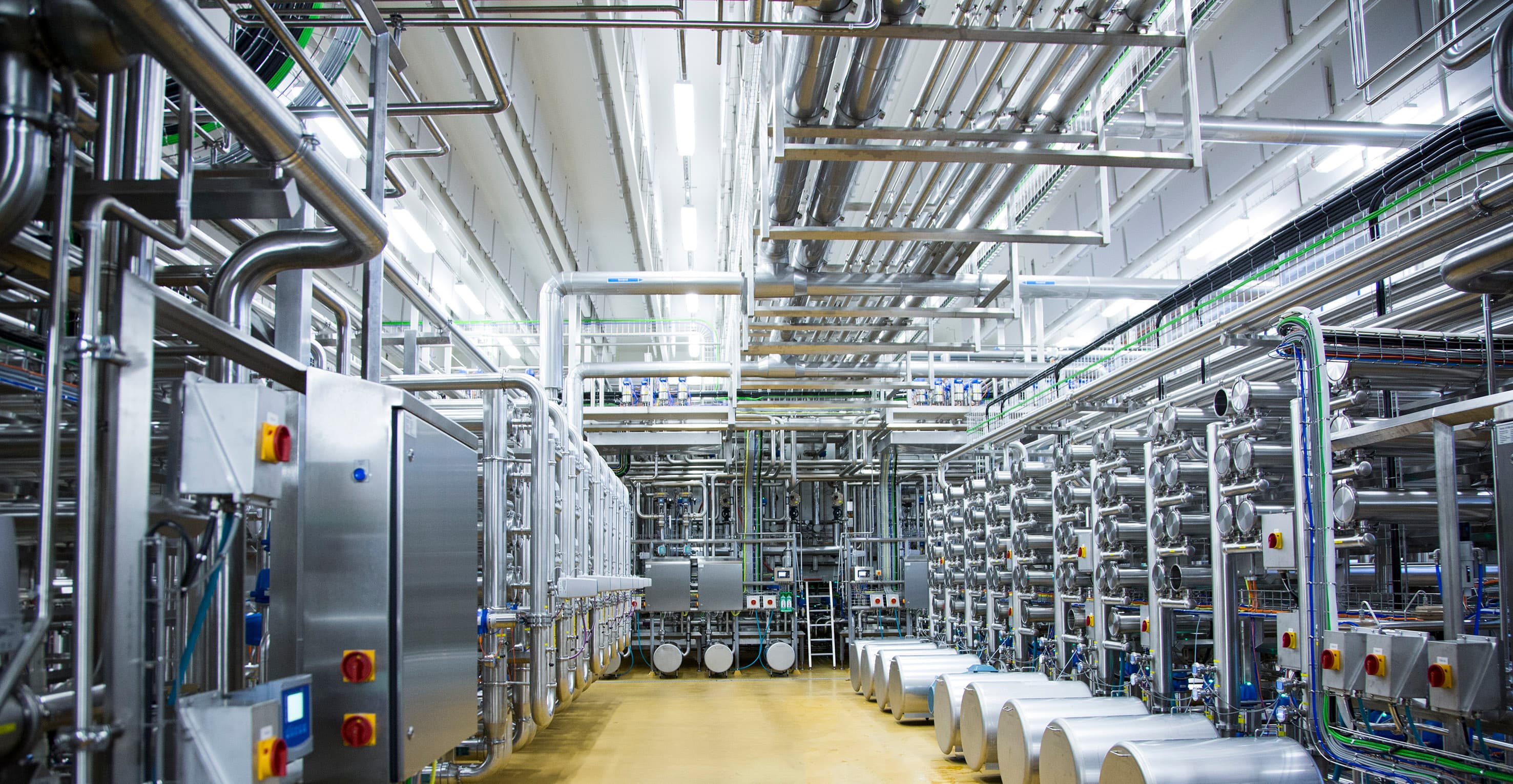
At Arla Foods Ingredients’ factory in Videbæk, West Jutland, whey from cheese production is transformed into specialised powder products. Through the MLEEP pilot project on machine learning (ML), Arla has, with assistance from Viegand Maagøe, optimised parts of the process.
Normally, the work is carried out by operators who monitor and control the process based on regular measurements taken at intervals. An ML system was set up to monitor in real time and continuously suggest adjustments via a digital dashboard.
AI provided clear improvement
During a test period, the project team was constantly present, and the operators consistently followed the recommendations of the AI algorithm. The aim was to find out how much the system could contribute to making the process more stable and the product quality more consistent.
The results based on that test period showed a clear improvement. When the operators followed the recommendations of the algorithm, the variation in product quality decreased significantly. The process ran more stably, which gave both a higher and more predictable product quality. At the same time, the trial showed the possibility of major energy savings.