Case
Functional buildings are still being torn down, even though the cost is high for both the climate and our resources. Only a very small share of building materials gets reused — the rest ends up as road fill or in landfill.
At the same time, Copenhagen is growing, and the pressure to find new housing is significant.
The classic solution is new construction in new districts like Lynetteholmen and Nordhavn. But new builds require enormous amounts of new materials and extensive infrastructure.
That's why the City of Copenhagen is exploring other options as well:
How can they create more housing with a far lower climate footprint by making better use of the buildings they already have?
And what is the real potential in the city's roofs — both unheated attics and flat roofs — when you take a sober look at the data, economics and regulations?
At Viegand Maagøe, we project-managed and delivered a four-part process focused on rooftop housing in the City of Copenhagen.
1) First, we mapped the potential using BBR data, aerial photos and other data sources:
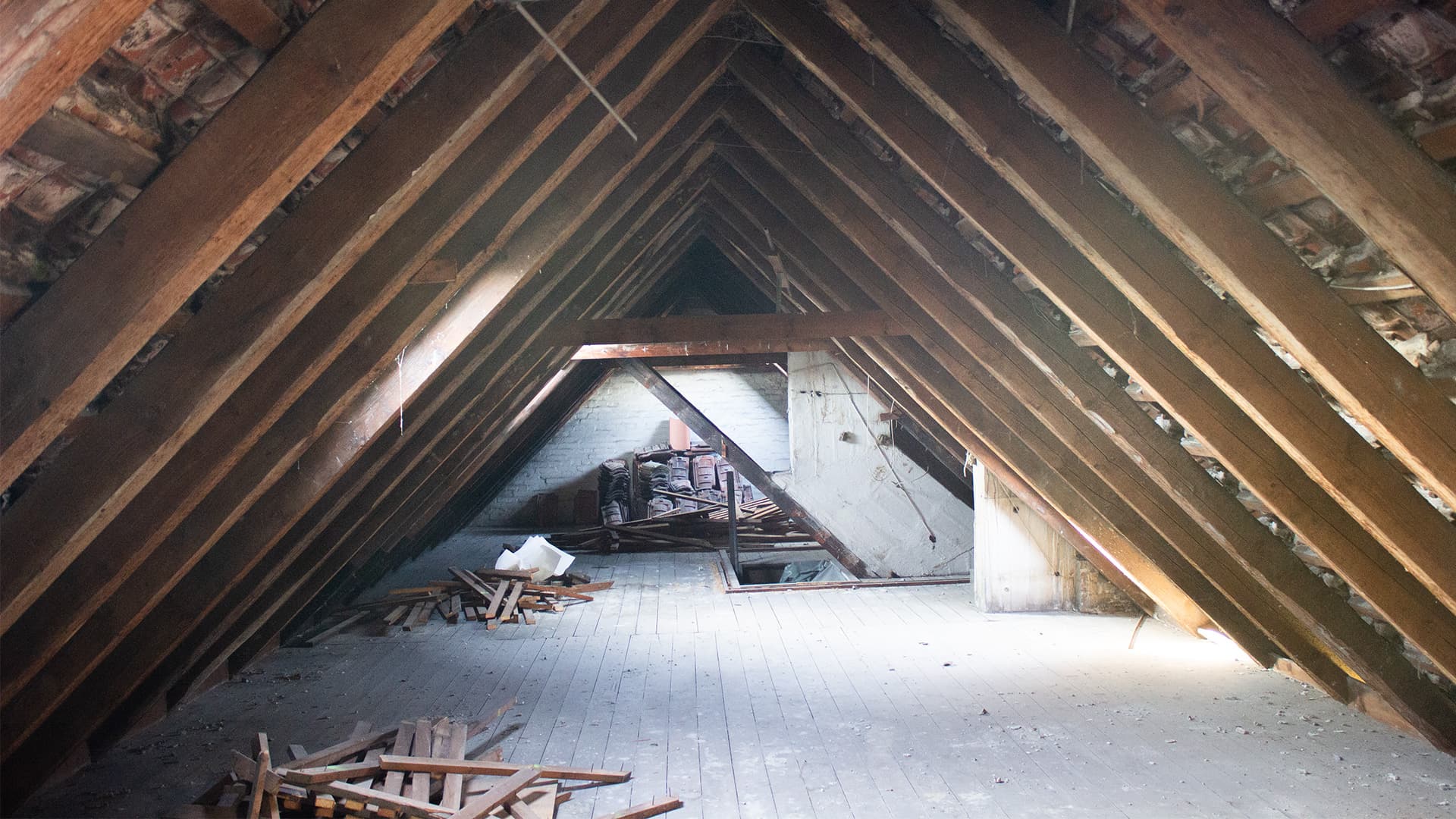
How many new homes can you actually create by utilising unheated attics and adding extra storeys on flat roofs, when you take the city's existing buildings as your starting point?
2) Next, we conducted a combined climate and socio-economic analysis.
Using the same LCA methodology as in the Danish building regulations, we compared rooftop housing with equivalent new builds: materials, construction site, energy consumption and operational savings.
With a consistent LCA methodology, the City of Copenhagen can easily compare the rooftop-housing business case against others.
3) We carried out a barrier analysis:
What barriers were standing in the way of the City of Copenhagen establishing rooftop housing at the desired scale? A barrier analysis gave a stronger foundation for success.
4) Recommendations:
How can the City of Copenhagen support building owners in establishing rooftop housing? And how can the City of Copenhagen (and other municipalities) promote the establishment of rooftop housing more broadly?
In addition, we produced a practical guide for housing cooperatives and owners' associations.
The new practical guide helps co-operative and owner-occupied housing associations navigate the rooftop housing process step by step, from the first considerations about finances and property conditions to the dialogue with the municipality and the construction phase itself.
For the City of Copenhagen, the guide provides a better basis for dialogue, earlier clarification, and more qualified projects.

The City of Copenhagen now has a more accurate picture of how many rooftop homes can realistically be established in Copenhagen — and a new tool that other municipalities can use by plugging in their own BBR data.
The analysis shows that rooftop housing on average emits around half as much CO₂ as equivalent new construction when you look at the entire life cycle.
At the same time, rooftop-housing projects typically deliver significant energy savings, because the roof structure also gets better insulation in the process.
The report estimates a total potential of 4,682 new dwellings from rooftops, of which 2,721 are in existing loft space.
The municipality has also gained a clear overview of the most important barriers, and where they themselves can make a difference — for example, by using the room for manoeuvre in the building regulations more actively, and by offering qualified pre-application dialogue.
That means unrealistic projects can be filtered out far earlier in the process.
And the realistic projects can get faster, more qualified sparring through the new guide.
The municipality now has new recommendations, a memo and concrete evidence of what the municipality, building owners and building advisors should do to increase the chance that the right projects come through. That means all parties can save time across the entire process.
And the new guide, *"From a new roof to more neighbours"*, is a concrete tool that the City of Copenhagen can now offer to housing cooperatives and owners' associations. As a result, the municipality can potentially save case-handling time and money, because the cooperatives and associations have a new tool to do solid groundwork themselves.
The project can therefore bring the City of Copenhagen closer to a new direction:
Rather than building new, the municipality can now preserve more, when that makes the most sense.
Both for the climate and for the economy.
In the Bevar Mere ("Preserve More") project, the City of Copenhagen, Viegand Maagøe and NielsensArk are showing how a municipality can create new housing by preserving and converting existing buildings instead of building new ones.
The project is supported by Bevar Mere — an initiative led by Grundejernes Investeringsfond, Landsbyggefonden, Dreyers Fond and Realdania.
It is one of 17 projects in total developing knowledge and tools to create the housing of the future in today's buildings. Results from the 17 projects will be published in 2025–2026.
Read more at: www.bevar-mere.dk
Since 2006, we have helped hundreds of companies, organisations, public authorities and everything in between accelerate the green transition and advance the sustainability agenda. Reach out if you'd like to hear more about how we can help you.
