
Despite operating in a highly complex utility sector, Hillerød Forsyning has now gained a full overview of CO₂ emissions, from pipe to radiator, through a detailed climate accounting system.
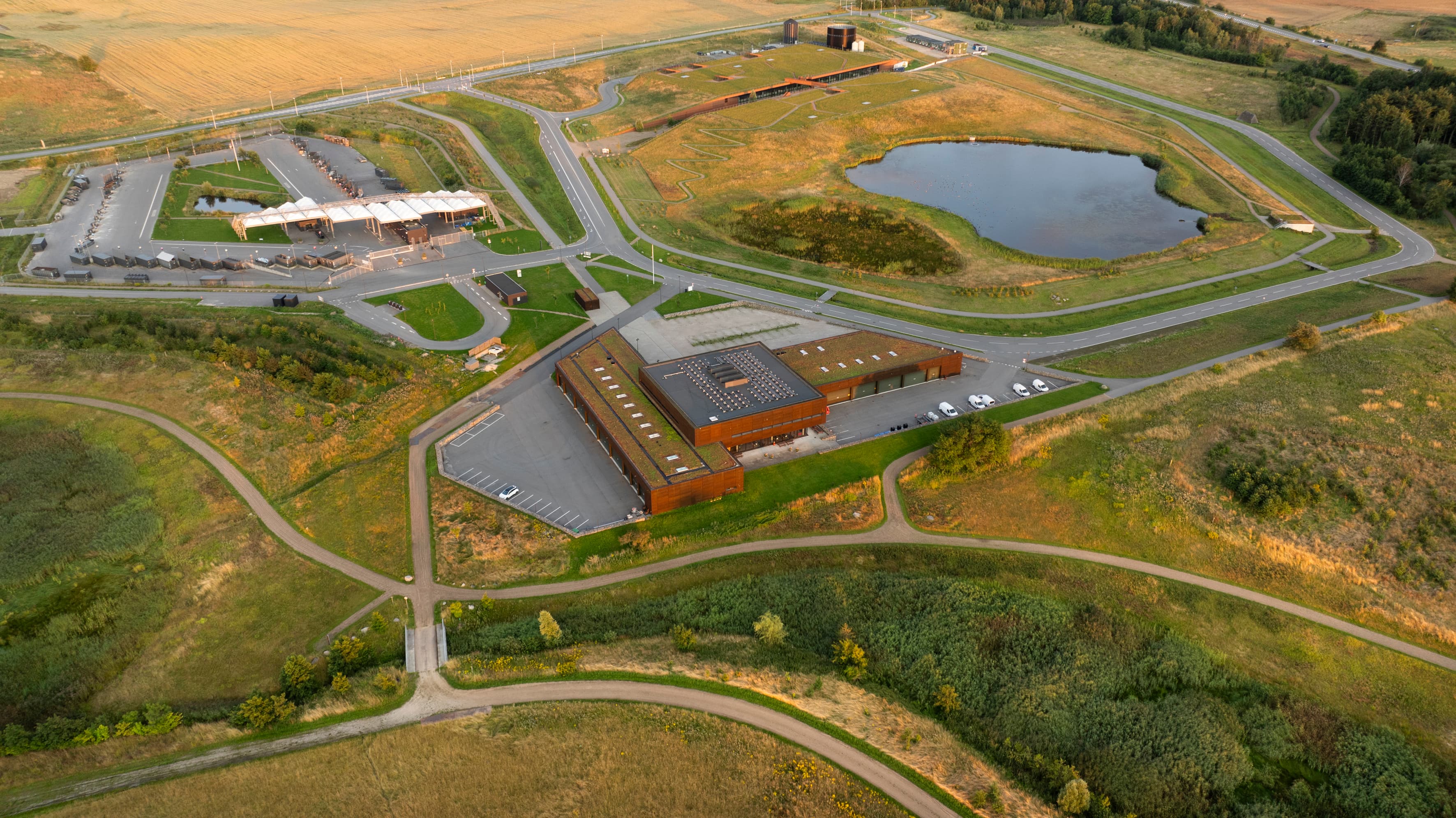
Hillerød Forsyning is Hillerød Municipality’s multi-utility company, responsible for district heating, water, wastewater and waste. In short, they provide the most critical infrastructure for citizens and businesses in Hillerød.
Hillerød Municipality aims to be climate neutral by 2050.
Hillerød Forsyning plays a key role in this ambition but lacked a clear picture:
Where do CO₂ emissions actually come from, and what do they amount to per citizen?
As a multi-utility company with heat production, treatment plants, refuse collection vehicles and large construction projects, it was difficult to see where new initiatives would have the greatest impact.
Natural gas, wood chips, contractor hours, pipes, concrete and machinery all blurred into one opaque pool of CO₂.
When, as a multi-utility company, you supply your own companies with heat and electricity, it is crucial to have the right method from the outset, otherwise you risk counting the same emissions twice across your organisation.
Hillerød Forsyning also had a large volume of biogenic emissions, which are complex to calculate and understand in themselves.
Hillerød Forsyning therefore needed a climate account that was thoroughly developed and that could, over time, be used to support the best possible decisions.

Together with us at Viegand Maagøe, Hillerød Forsyning started out by preparing a climate account in line with the GHG Protocol.
The first step was to get scope 1 and 2 in place:
The direct emissions from plants, combined heat and power plants and vehicles, as well as the energy they purchase.
We mapped the entire organisation and all utility branches and prepared one consolidated inventory plus separate accounts for each area.
In the next step we expanded to scope 3 and went further down the value chain:
Capital goods, contractor work, district heating pipes, materials, procurement and circular economy.
When you prepare a climate account, you can take two approaches when calculating the emission factor:
In Hillerød Forsyning’s case, we used both spend-based and activity-based data.
Where possible, we converted data into kilograms, litres, metres and tonnes, and replaced several of the generic spend factors with specific EPDs from Hillerød Forsyning’s suppliers.
Hillerød Forsyning now has a climate account that not only shows the status quo, but also points much more precisely to where it makes most sense to act.
Hillerød Forsyning now has a CO₂ overview per utility branch and per citizen (on average), which they can actively use in both strategy work and dialogue with the municipality and politicians.
The climate account is included in Hillerød Forsyning’s considerations and decisions, including electrification and the phase-out of fossil energy sources, and thereby helps to reduce CO₂ emissions.
The detailed data basis also means that in tenders Hillerød Forsyning can focus on the areas with the greatest potential, for example by setting specific requirements for suppliers, comparing CO₂ footprints for, say, district heating pipes and concrete, and over time choosing the most climate-friendly solutions.
At the same time, the consistent method makes it possible to track developments year on year and document how emissions per citizen evolve.
Work on the third climate account builds on the first two inventories, so that data quality, methodology, and possible uses become more robust each year.
For Hillerød Forsyning, the climate account has become a concrete management tool that makes it easier to make the right investments across the entire value chain.
The climate account is an important tool in Hillerød Forsyning’s efforts to support Hillerød Municipality’s climate targets.
This way, the work contributes to the municipality’s long-term efforts to become climate neutral by 2050.
Since 2006, we have helped hundreds of companies, organisations, public authorities and everything in between to accelerate the green transition and advance the sustainability agenda. Get in touch if you would like to hear more about how we can help you.
